Filament yarn
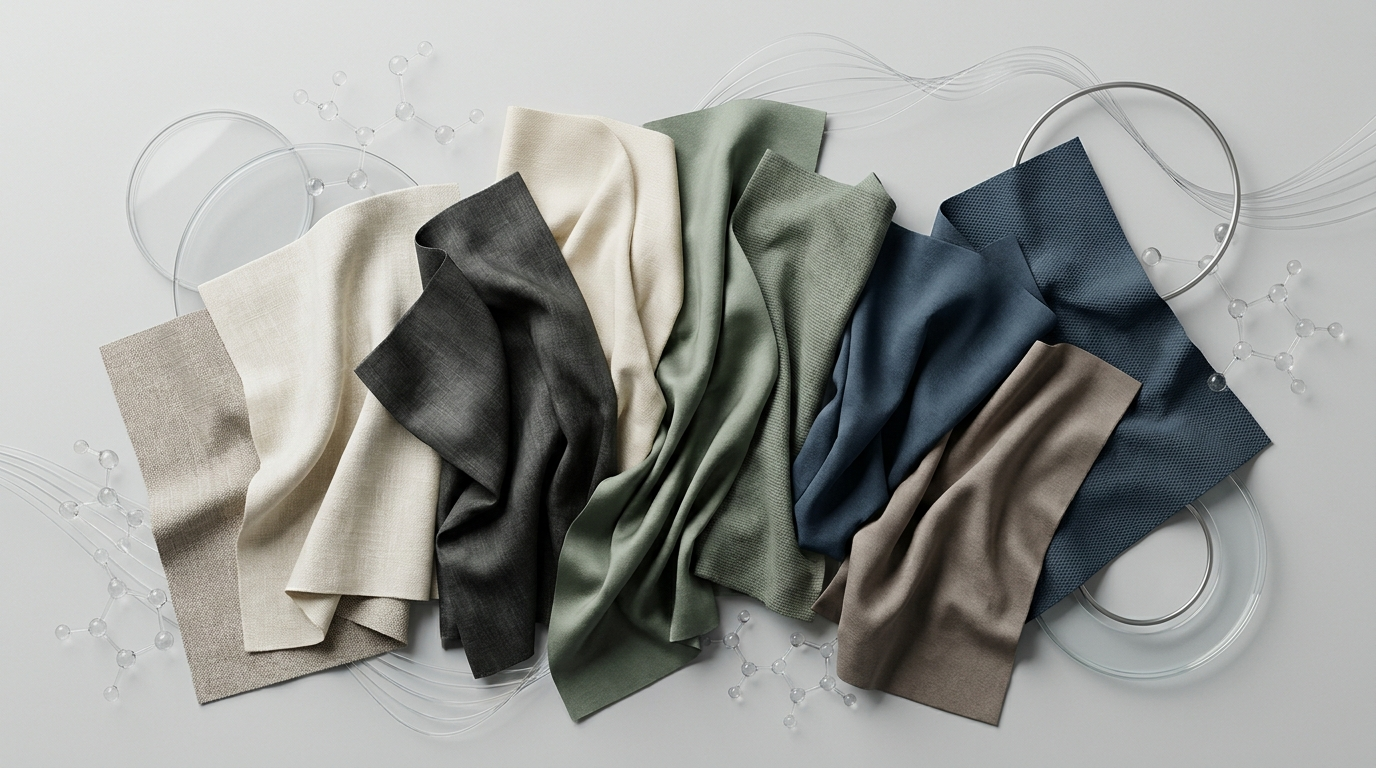
Continuous multi-filament for weaving, knitting and technical fabrics. Consistent tenacity across recycled and biobased routes.
Textile-to-Textile recycling route
Post-consumer and post-industrial textile feedstock, chemically returned to its polymer building blocks and re-engineered into a virgin-grade material — indistinguishable in the loom, distinct on the label.

Continuous multi-filament for weaving, knitting and technical fabrics. Consistent tenacity across recycled and biobased routes.
Short-staple spun yarn for blends and next-to-skin applications. Engineered handfeel without additive compromise.
Cut fibre for nonwovens, fillings and blended spinning. Available in a range of deniers and cut lengths.
Colour and additive concentrates matched to the base polymer — full circularity carried through the value chain.
Biobased route
A 100% biobased polymer with verified end-of-life biodegradation under defined conditions. Same specification sheet, same processing window — a plant-derived path to the same NovaPoly standard.

Continuous multi-filament for weaving, knitting and technical fabrics. Consistent tenacity across recycled and biobased routes.
Short-staple spun yarn for blends and next-to-skin applications. Engineered handfeel without additive compromise.
Cut fibre for nonwovens, fillings and blended spinning. Available in a range of deniers and cut lengths.
Colour and additive concentrates matched to the base polymer — full circularity carried through the value chain.
The advanced enzymatic additive draws microbes and methanogens to the NovaPoly yarn, starting the biodegradation process.
Microbes and methanogens split long polymer chains into shorter segments — polymer becomes monomer, ready for digestion.
Bacteria and methanogens digest the shorter polymer segments, accelerating the breakdown of the material.
Without oxygen, the remains become CO₂, CH₄ (methane) and biomass — organic matter returned to the cycle.
With oxygen, the remains become CO₂, H₂O and energy in the form of heat — a clean, natural end-of-life pathway.
0%
The advanced enzymatic additive draws microbes and methanogens to the NovaPoly yarn, starting the biodegradation process.
Microbes and methanogens split long polymer chains into shorter segments — polymer becomes monomer, ready for digestion.
Bacteria and methanogens digest the shorter polymer segments, accelerating the breakdown of the material.
Without oxygen, the remains become CO₂, CH₄ (methane) and biomass — organic matter returned to the cycle.
With oxygen, the remains become CO₂, H₂O and energy in the form of heat — a clean, natural end-of-life pathway.